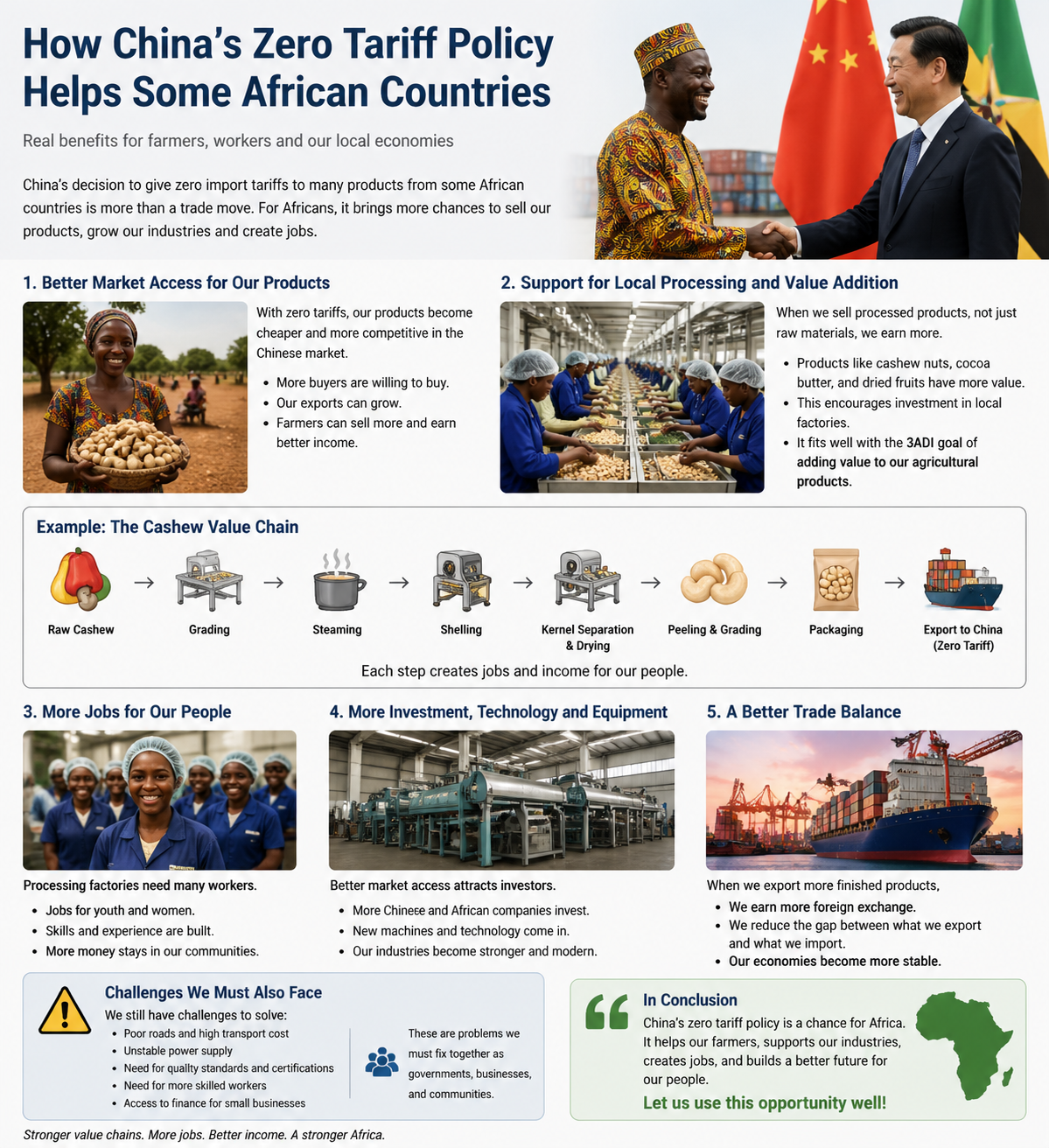
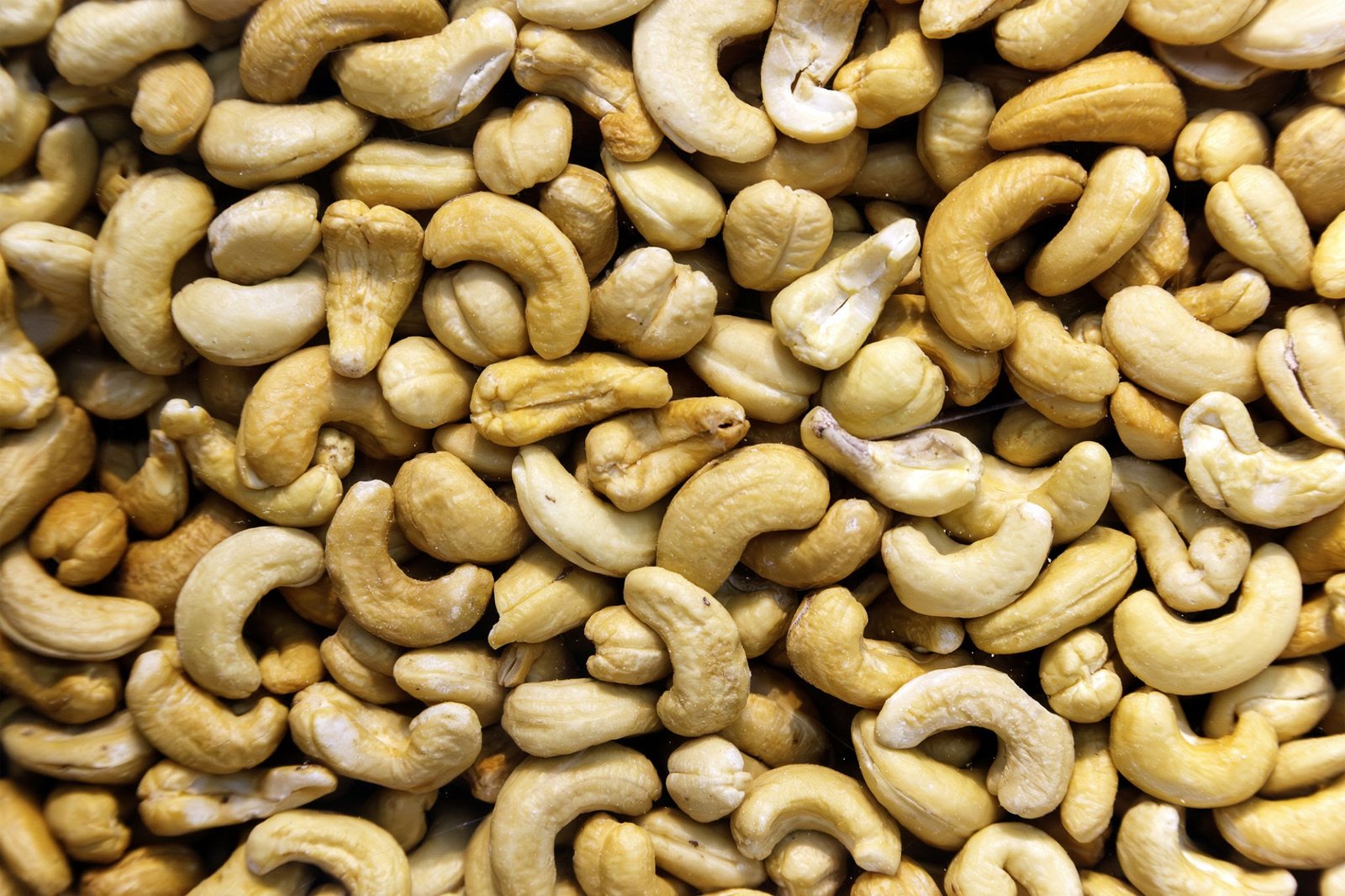
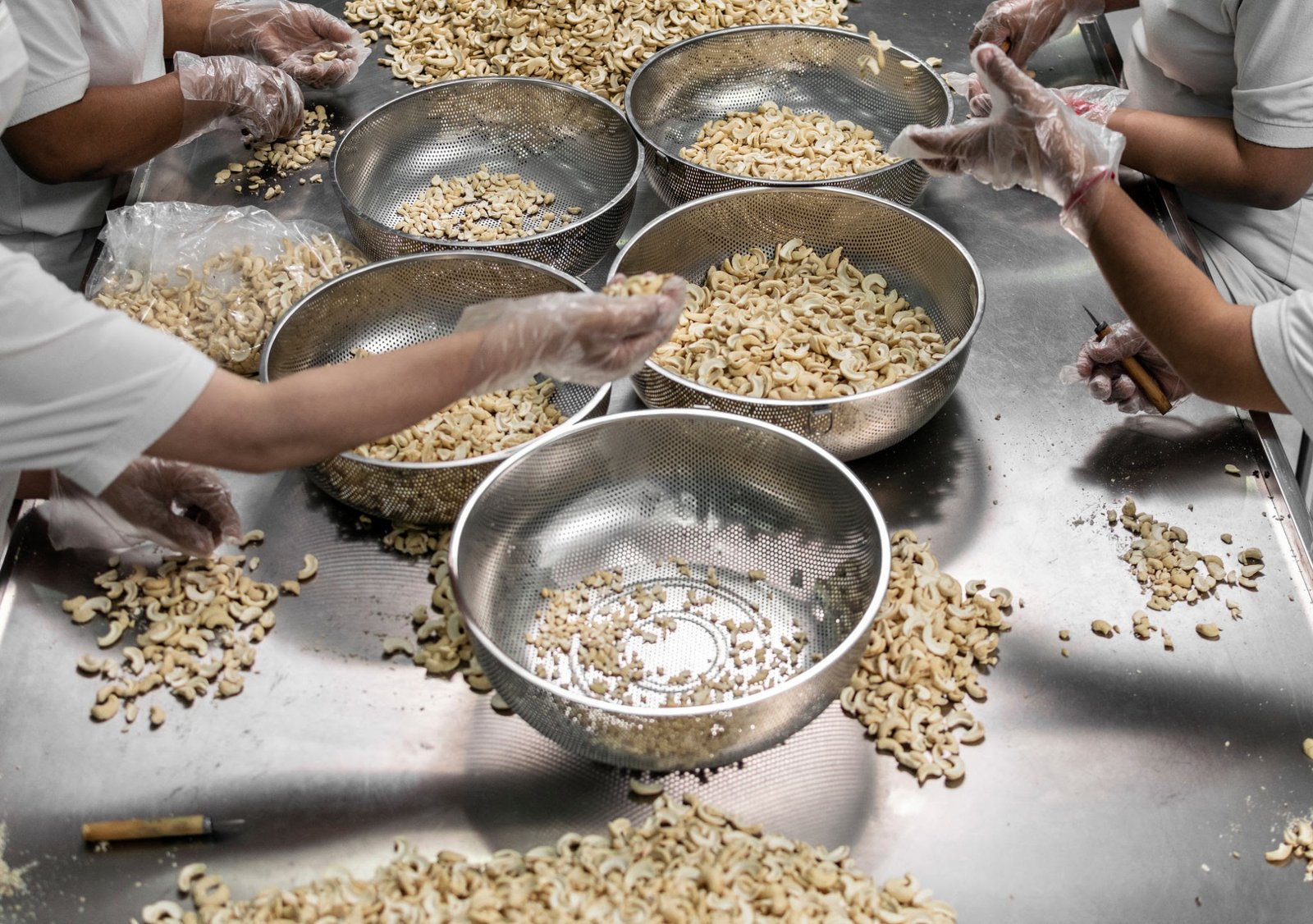
China has recently granted tariff exemptions to certain African countries. For many African farmers and small businesses, this is not just a policy on paper—it is a change they can feel in their daily work. Let’s look at the main benefits, using examples from the cashew industry and other agricultural sectors. Farmers Get Better Market
The global cashew industry is undergoing a quiet but important shift. While demand continues to grow in Europe and North America, a new driver is emerging — Asia, especially China. At the same time, policy changes are beginning to reshape trade patterns between Africa and major importing markets. One of the most significant developments is
Africa’s cashew industry is entering a new phase. For many years, the continent has been known primarily as a supplier of raw cashew nuts. Today, however, there is a clear shift toward local processing, driven by rising global demand, policy support, and the need for higher value creation. But while the opportunity is real, success
Africa is one of the world’s largest producers of raw cashew nuts. Countries such as Nigeria, Côte d’Ivoire, Tanzania, and Ghana contribute significantly to global supply. Yet, despite this strong production base, a large portion of cashew nuts are still exported in raw form rather than being processed locally. This raises an important question: Why
Africa stands at a turning point in agricultural development. While the continent produces large volumes of raw agricultural commodities, much of the value is still created outside Africa. The African Agribusiness and Agro-industry Development Initiative (3ADI) was established to change this reality — by transforming agriculture into a highly productive, value-driven, and profitable industry. One