

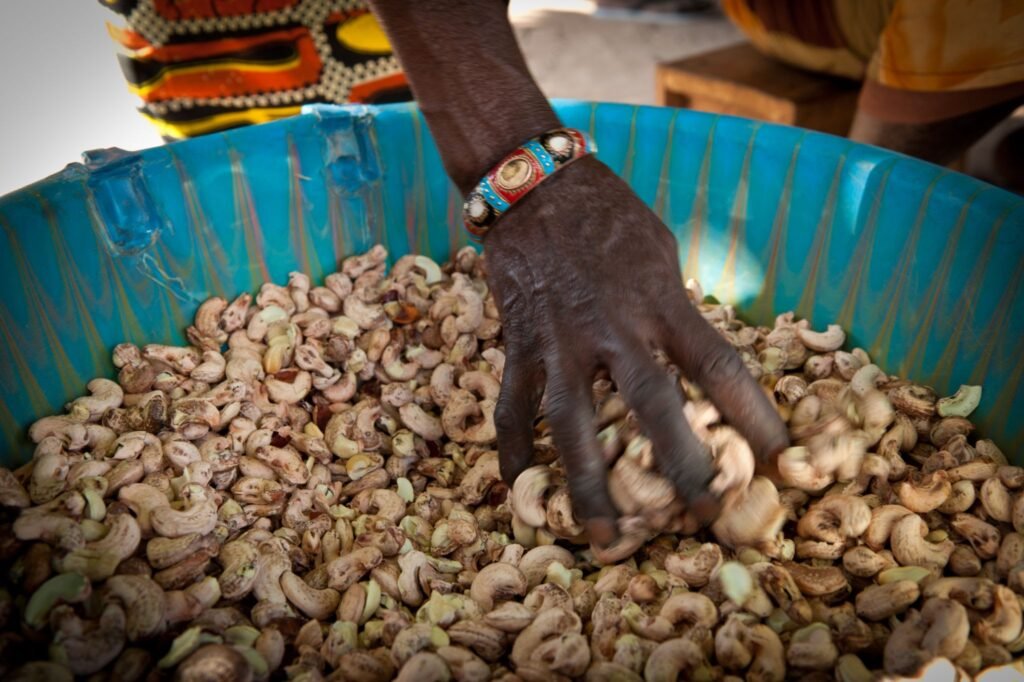
Africa is one of the world’s largest producers of raw cashew nuts. Countries such as Nigeria, Côte d’Ivoire, Tanzania, and Ghana contribute significantly to global supply.
Yet, despite this strong production base, a large portion of cashew nuts are still exported in raw form rather than being processed locally.
This raises an important question:
Why does cashew processing remain limited in many producing regions?
The Gap Between Production and Processing
At first glance, the opportunity seems obvious. Processing cashew nuts locally can:
- Increase export value significantly
- Create jobs in rural areas
- Strengthen local industries
These goals align closely with the vision of the 3ADI initiative, which promotes value addition and agro-industrial development across Africa.
However, the reality on the ground is more complex.
Understanding the Cashew Processing Process
To understand the challenge, it is important to first look at how cashew nut processing actually works.
Unlike many other crops, cashew processing is not a single-step operation. It involves multiple stages, each requiring specific conditions and equipment.
A typical cashew processing plant includes:
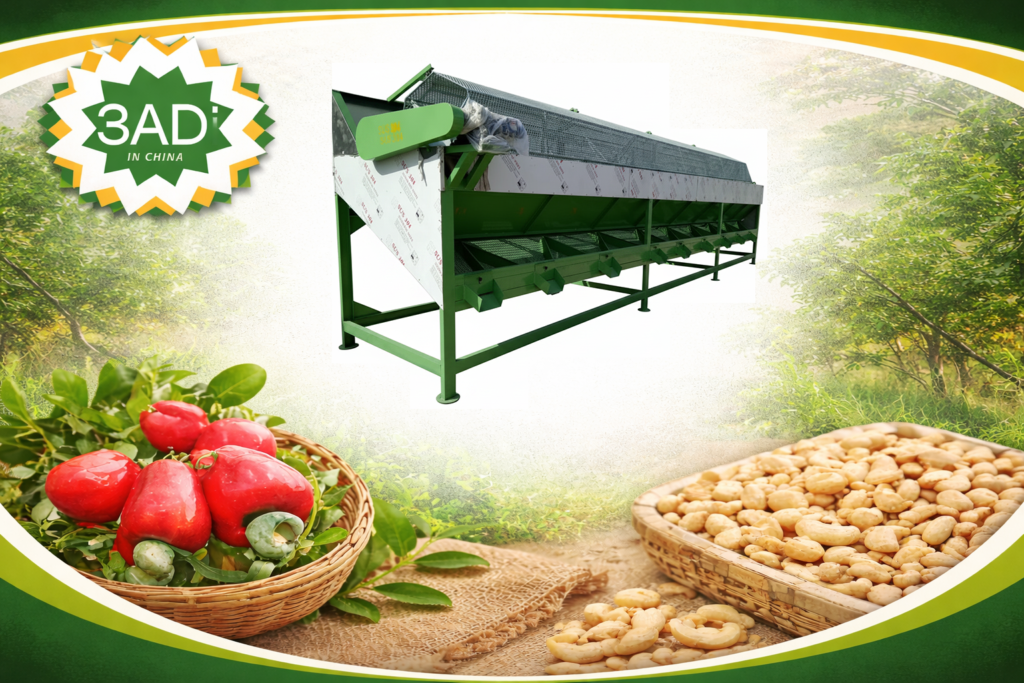
Raw Cashew Nut Grading Machine
Raw Cashew Nut Grading Machine for Size Classification Before Processing
Sort raw cashew nuts by size to ensure uniform processing, improve steaming efficiency, and reduce kernel breakage.
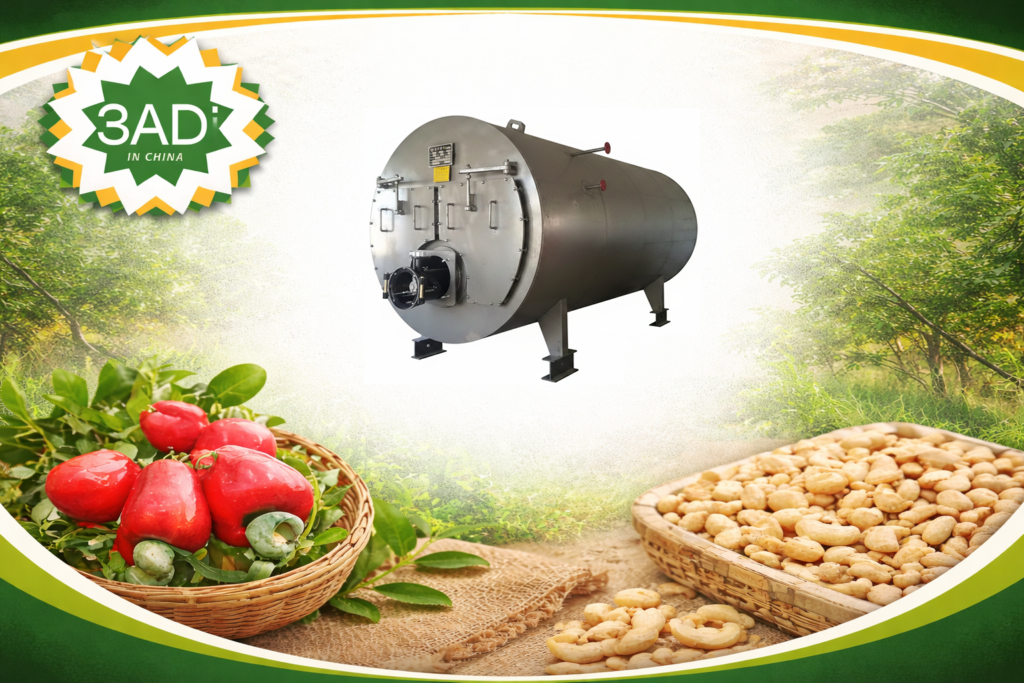
Cashew Nut Steam Cooker (Boiling System)
Cashew Steam Boiler for Cooking and Drying Systems in Cashew Processing Plant
Steam or boil raw cashew nuts to soften the shell, making it easier to crack and improving kernel quality.
[Afterwards, they need to be air-dried naturally or cooled using a cashew cooling line.]
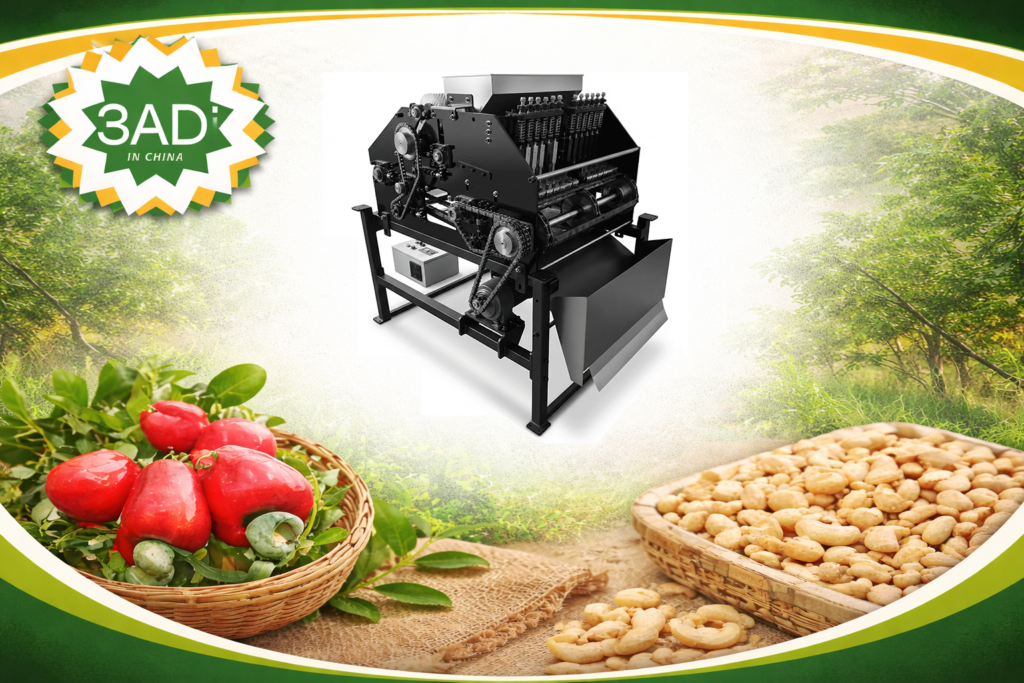
Semi-Automatic Cashew Shelling Machine
Automatic Cashew Nut Shelling Machine for High Efficiency Raw Cashew Processing
Crack the cashew shell efficiently while minimizing kernel damage, increasing productivity compared to manual cutting.
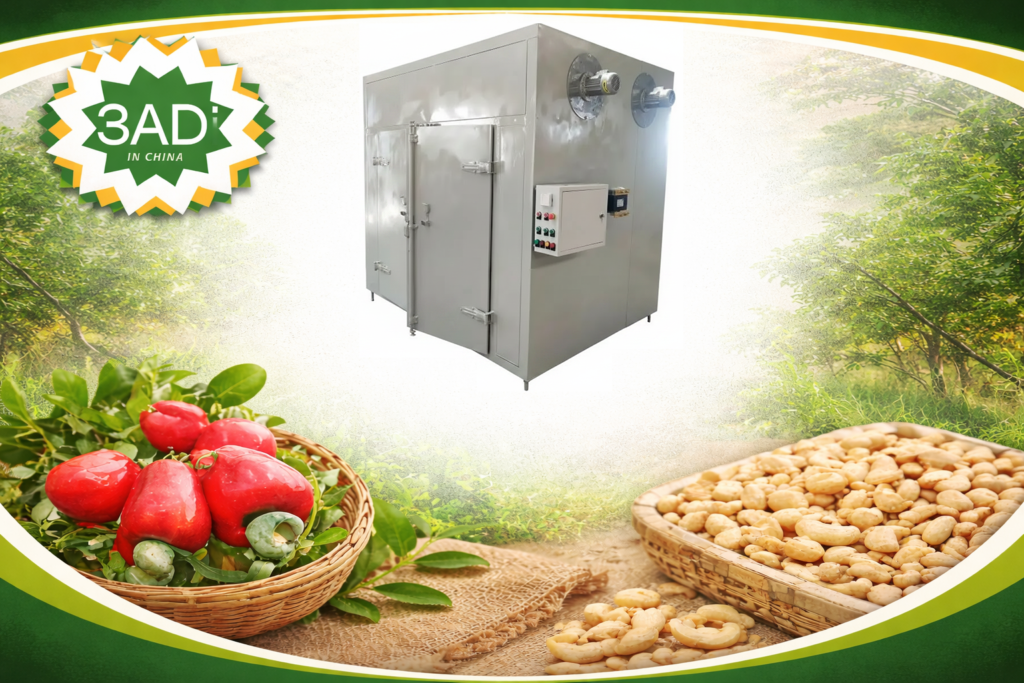
Cashew Kernel Drying Oven
Cashew Dryer Machine for Kernel Drying in Processing Plant
Dry shelled kernels to the required moisture level, making peeling easier and ensuring better storage quality.

Cashew Kernel Humidifying Machine
Cashew Kernel Humidifier Machine for Improved Peeling Efficiency and Low Breakage
Restore slight moisture to dried kernels to loosen the testa (skin), improving peeling efficiency and reducing breakage.
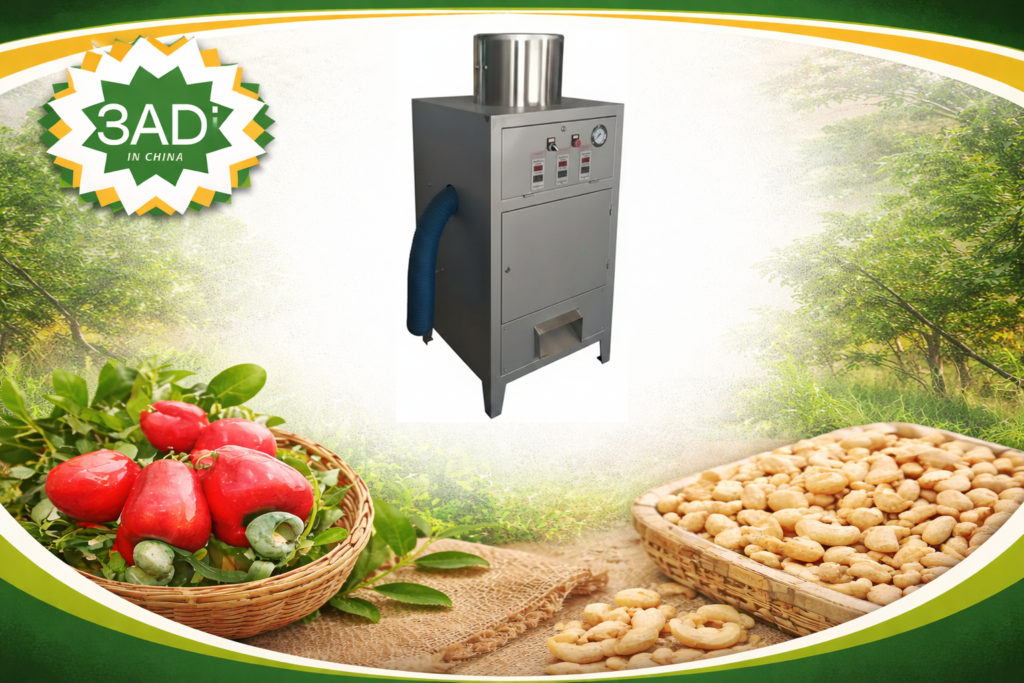
Cashew Peeling Machine
Air Type Cashew Peeling Machine with High Efficiency Kernel Separation
Remove the thin skin from cashew kernels quickly and cleanly, reducing labor cost and improving output quality.
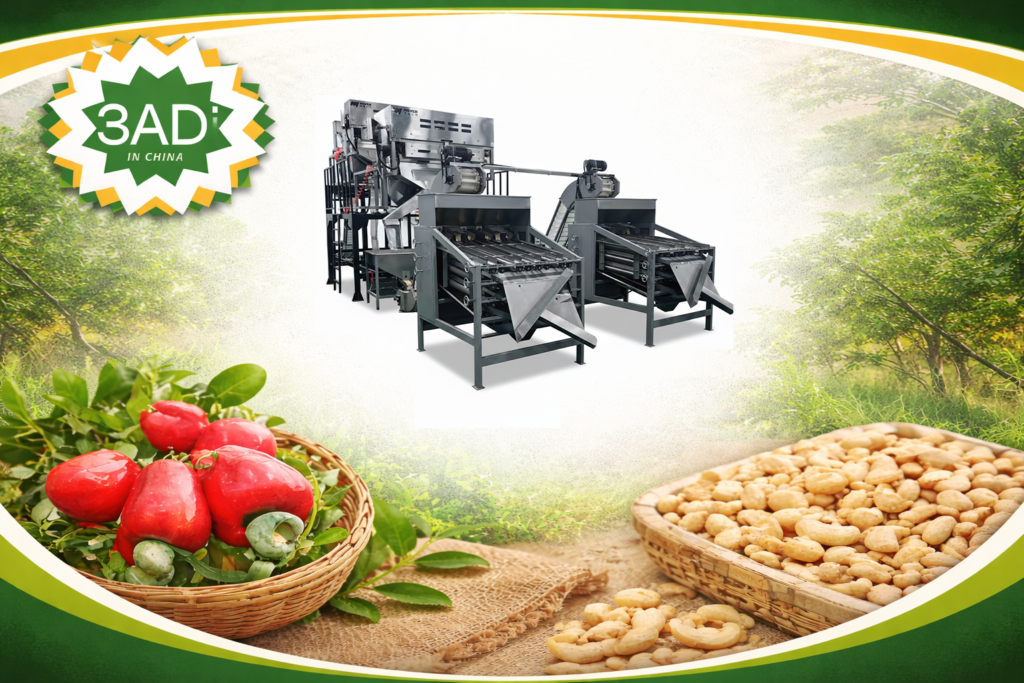
Cashew Kernel Color Sorter Machine
Cashew Kernel Grading Machine for Accurate Size Sorting in Cashew Processing Line
Automatically sort kernels by color and quality, removing defective or discolored nuts to meet export standards.
- Grading of raw nuts
- Steam cooking
- Shelling (cutting)
- Kernel separation
- Drying
- Humidification
- Peeling
- Grading of kernels
- Packaging
Each stage affects the final product quality and overall profitability.
Processing Is Technically Demanding
One of the main reasons for low local processing is the technical complexity.
For example:
- If cooking is not properly controlled, kernels may break easily
- During shelling, poor cutting precision can reduce whole kernel yield
- Incorrect drying can lead to mold or quality loss
- Peeling requires careful moisture balance to avoid damage
Even small inefficiencies in these steps can lead to significant financial losses.
This is why modern cashew processing machines are designed to control variables such as temperature, pressure, and moisture more precisely.
The Labor–Technology Trade-Off
Traditionally, cashew processing has relied heavily on manual labor.
This approach has some advantages:
- Lower initial investment
- Job creation
But it also comes with clear limitations:
- Inconsistent product quality
- High kernel breakage rates
- Low processing efficiency
- Difficulty scaling production
On the other hand, mechanized cashew processing improves consistency and efficiency, but requires:
- Capital investment
- Technical knowledge
- Maintenance capacity
For many small processors, finding the right balance between labor and machinery remains a key challenge.
Infrastructure and Investment Barriers
Another important factor is infrastructure.
A reliable cashew processing unit depends on:
- Stable electricity supply
- Access to water
- Transport and logistics systems
In some regions, these conditions are not always guaranteed, making it difficult to operate a continuous processing line.
In addition, many investors are cautious due to uncertainties around:
- Market prices
- Equipment costs
- Return on investment
Search trends show increasing interest in topics like:
- cashew processing machine price
- cashew nut processing plant cost
- small scale cashew processing unit
This reflects a growing but still cautious market.
Knowledge and Skills Gap
Operating a cashew nut processing machine is not just about installation.
It requires:
- Understanding of processing parameters
- Operator training
- Quality control systems
Without proper training, even advanced machinery cannot deliver expected results.
This highlights the importance of human capital development, which is a core focus of 3ADI.
Market Access and Quality Standards
Processing is only valuable if the final product can compete in the market.
Export markets often require:
- Specific kernel grades (W180, W240, etc.)
- Low moisture content
- Consistent quality
Meeting these standards requires both process control and grading systems, which are not always available in small-scale operations.
A Gradual Transition, Not an Instant Shift
It is unrealistic to expect an immediate shift from raw export to full local processing.
Instead, what is happening — and likely to continue — is a gradual transition:
- Small-scale processing units emerging
- Adoption of semi-automatic machines
- Expansion into larger processing plants
- Integration into global value chains
This step-by-step approach allows countries to build both technical capacity and market confidence over time.
The Role of Coordinated Initiatives
This is where initiatives like 3ADI become relevant.
Rather than focusing only on production, the approach emphasizes:
- Building complete value chains
- Supporting agro-processing industries
- Encouraging investment and partnerships
- Sharing technical knowledge
The goal is not just to process more, but to build sustainable and competitive agro-industries.