
The global cashew industry is undergoing a quiet but important shift.
While demand continues to grow in Europe and North America, a new driver is emerging — Asia, especially China. At the same time, policy changes are beginning to reshape trade patterns between Africa and major importing markets.
One of the most significant developments is China’s zero-tariff policy on imports from selected African countries.
This policy is not just about trade. It has deeper implications for cashew processing, industrialization, and value chains in Africa.
A New Trade Dynamic Between China and Africa
In recent years, China has expanded preferential trade policies for African countries, including:
- Zero-tariff treatment on a wide range of goods
- Easier market access for agricultural exports
- Stronger economic cooperation frameworks
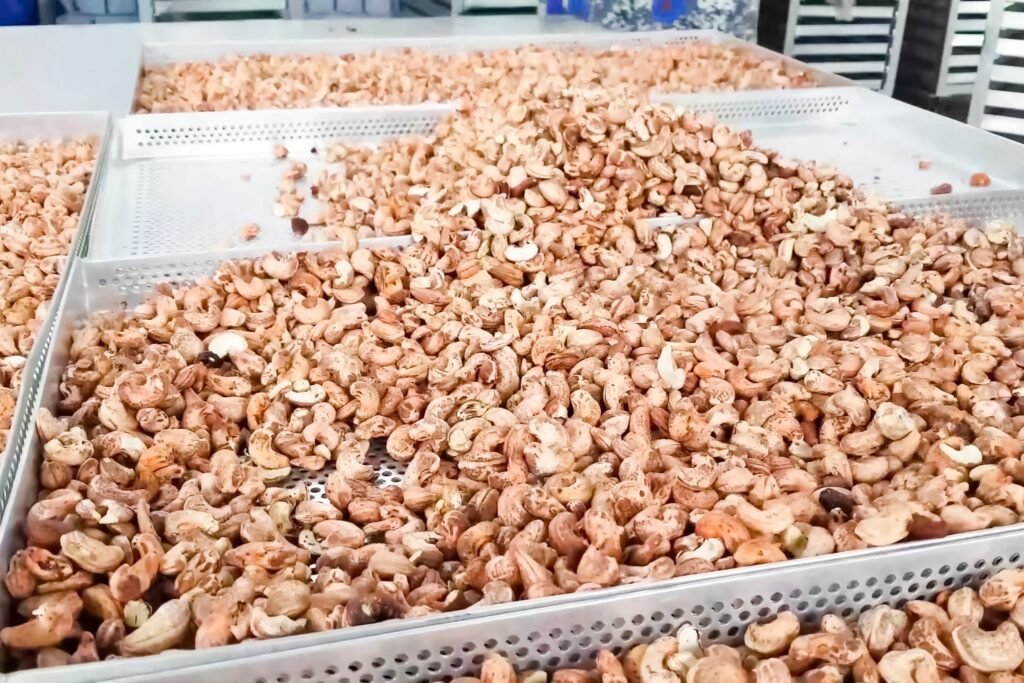
For cashew-producing countries, this creates a new export channel — not only for raw nuts, but increasingly for processed cashew kernels.
Why This Matters for the Cashew Sector
Traditionally, Africa exports raw cashew nuts mainly to Asia (especially India and Vietnam) for processing. The processed kernels are then re-exported globally.
This structure has two limitations:
- Africa captures only a small portion of the final value
- Processing industries remain underdeveloped locally
With China offering zero tariffs, the equation begins to change:
Exporting processed cashew products becomes more competitive
Direct trade relationships become more viable
Incentives for local processing increase
From Raw Export to Value Addition
The shift from raw export to local processing is a central goal of agro-industrial initiatives like 3ADI.
A complete cashew processing system allows countries to move up the value chain by transforming raw nuts into export-ready kernels.
The processing workflow typically includes:
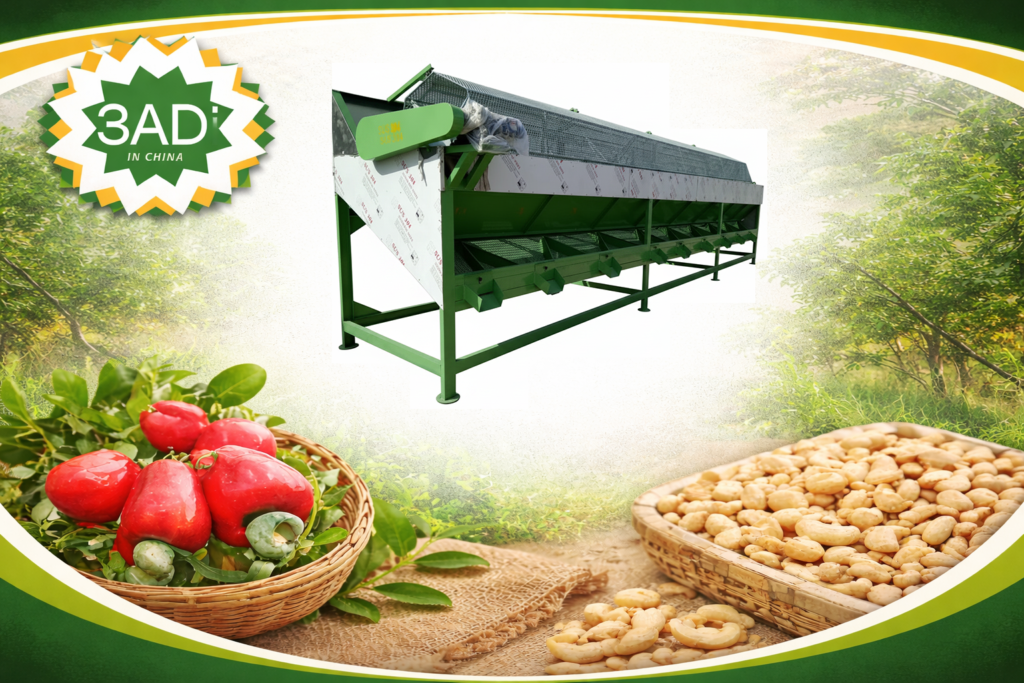
Raw Cashew Nut Grading Machine
Raw Cashew Nut Grading Machine for Size Classification Before Processing
Sort raw cashew nuts by size to ensure uniform processing, improve steaming efficiency, and reduce kernel breakage.
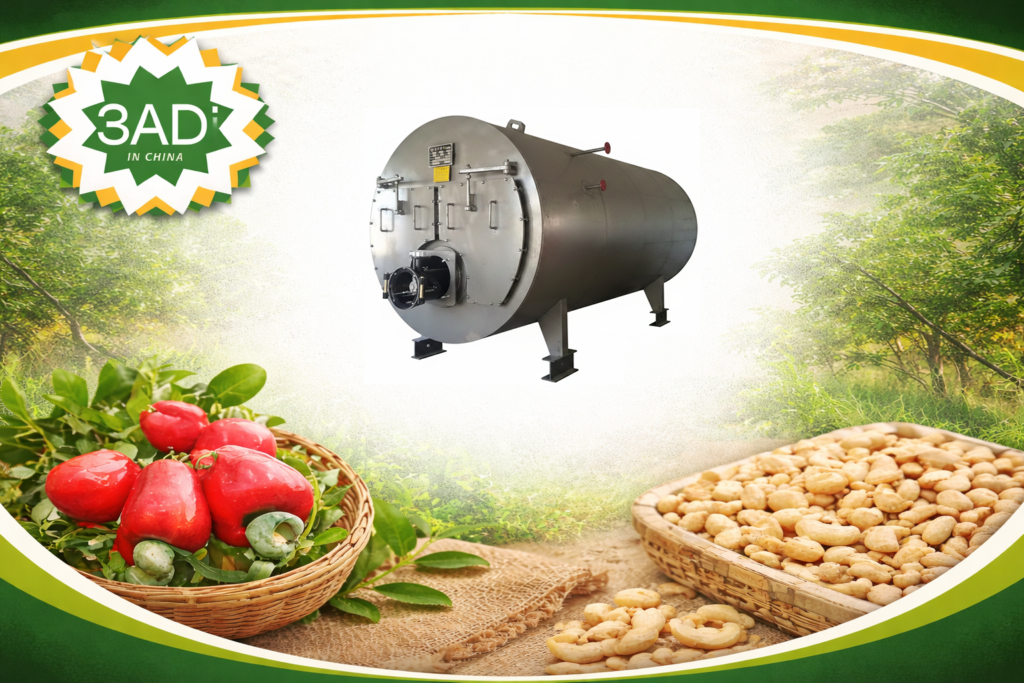
Cashew Nut Steam Cooker (Boiling System)
Cashew Steam Boiler for Cooking and Drying Systems in Cashew Processing Plant
Steam or boil raw cashew nuts to soften the shell, making it easier to crack and improving kernel quality.
[Afterwards, they need to be air-dried naturally or cooled using a cashew cooling line.]
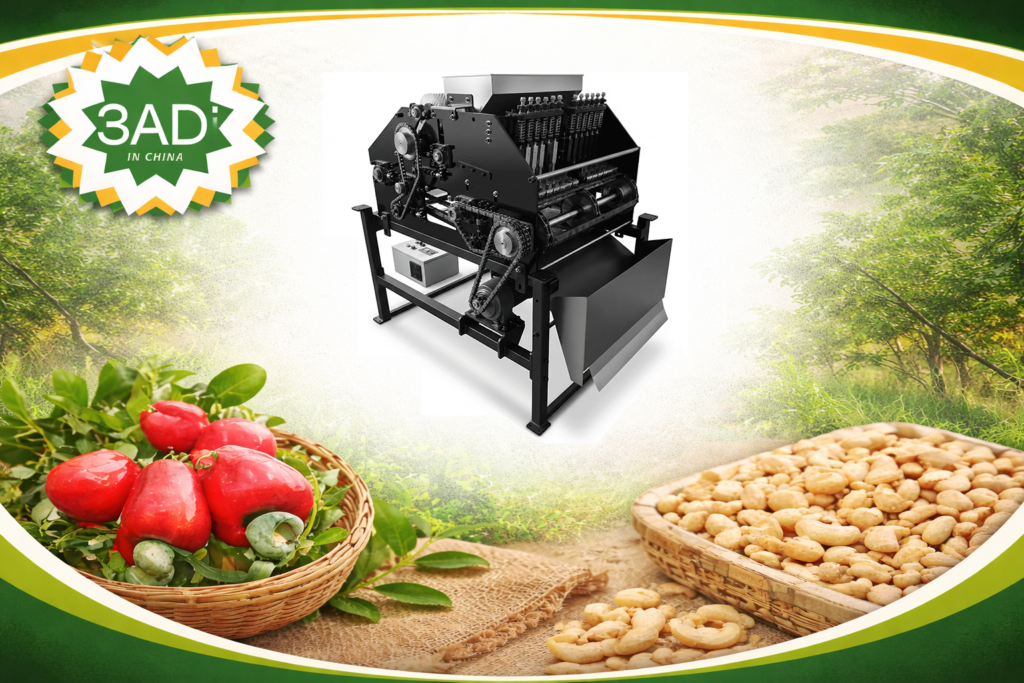
Semi-Automatic Cashew Shelling Machine
Automatic Cashew Nut Shelling Machine for High Efficiency Raw Cashew Processing
Crack the cashew shell efficiently while minimizing kernel damage, increasing productivity compared to manual cutting.
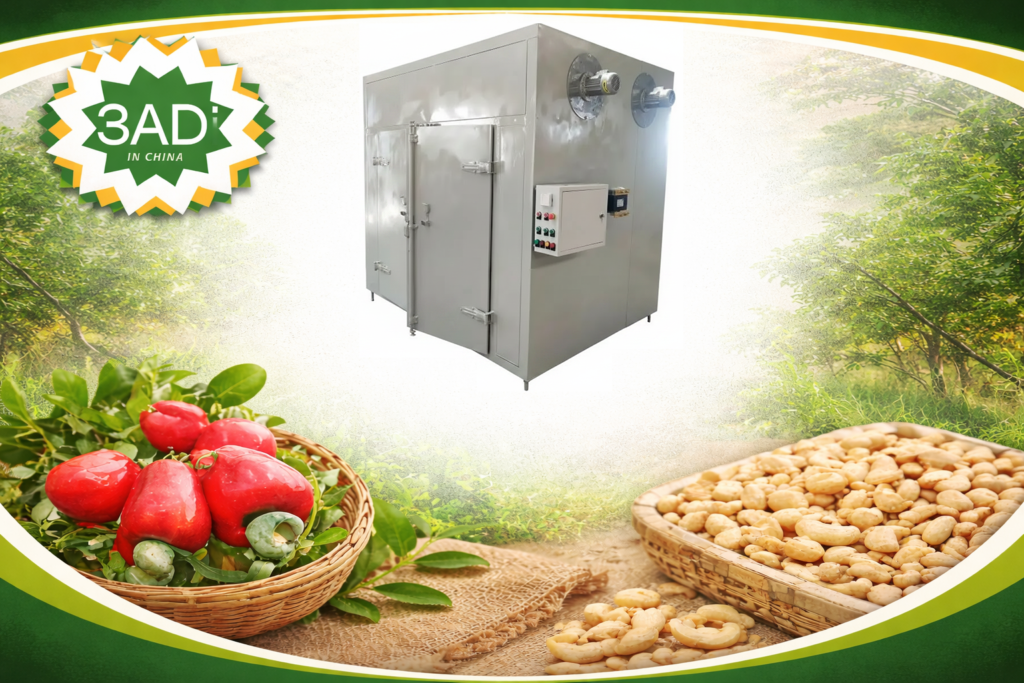
Cashew Kernel Drying Oven
Cashew Dryer Machine for Kernel Drying in Processing Plant
Dry shelled kernels to the required moisture level, making peeling easier and ensuring better storage quality.
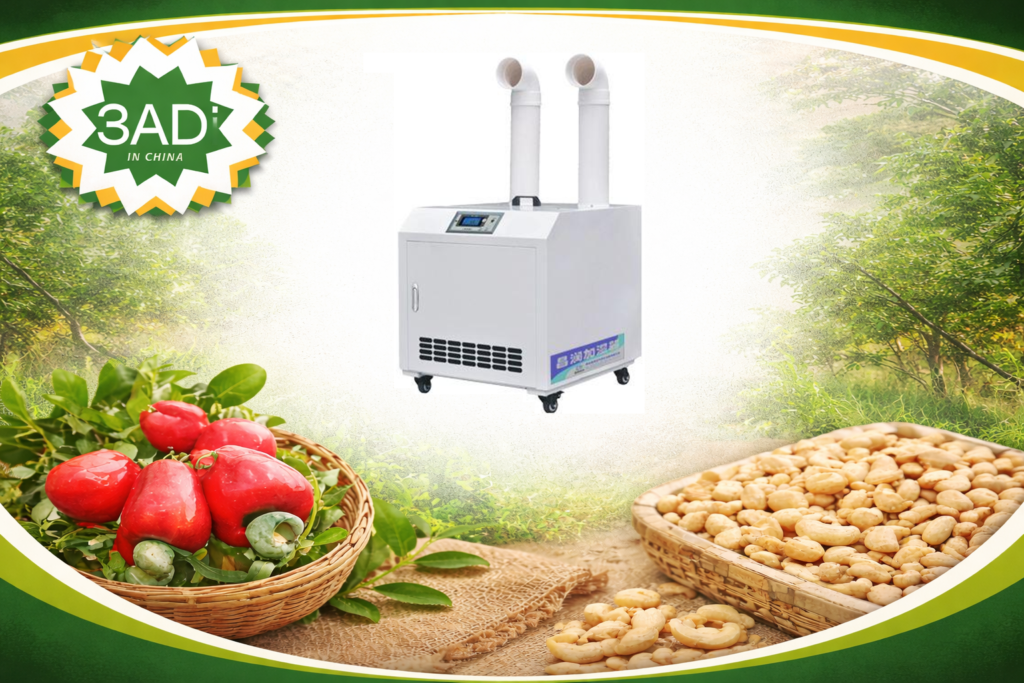
Cashew Kernel Humidifying Machine
Cashew Kernel Humidifier Machine for Improved Peeling Efficiency and Low Breakage
Restore slight moisture to dried kernels to loosen the testa (skin), improving peeling efficiency and reducing breakage.
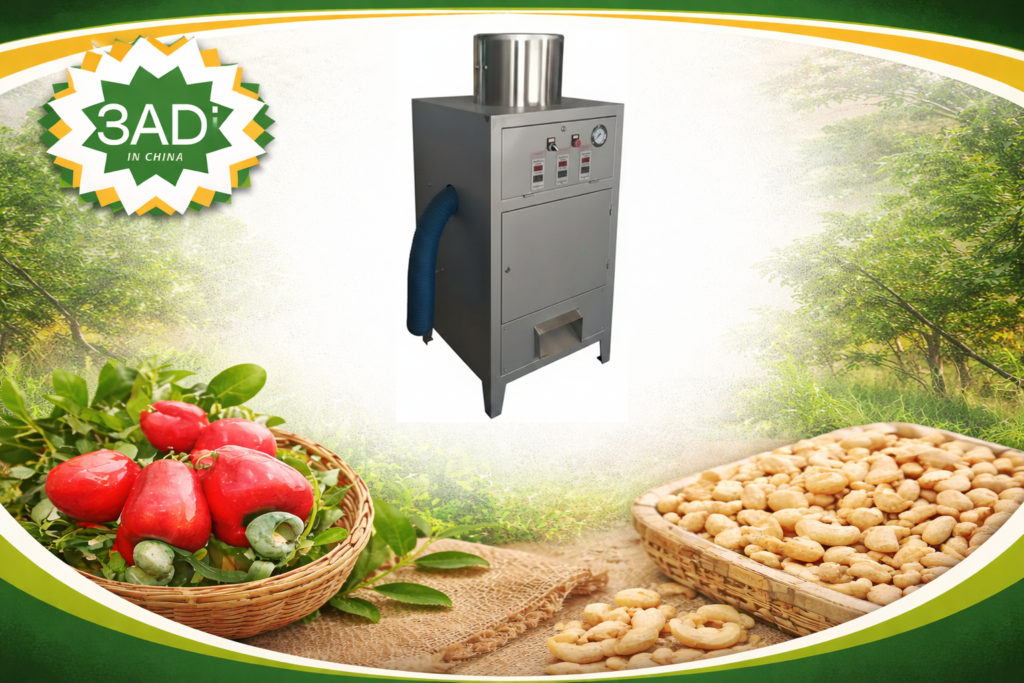
Cashew Peeling Machine
Air Type Cashew Peeling Machine with High Efficiency Kernel Separation
Remove the thin skin from cashew kernels quickly and cleanly, reducing labor cost and improving output quality.
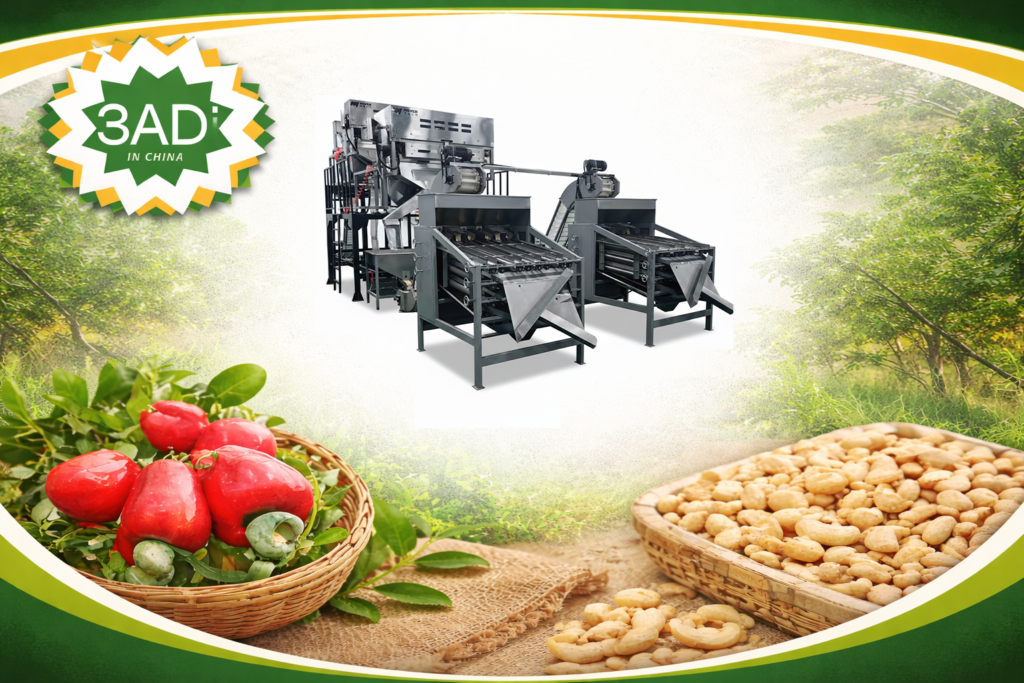
Cashew Kernel Color Sorter Machine
Cashew Kernel Grading Machine for Accurate Size Sorting in Cashew Processing Line
Automatically sort kernels by color and quality, removing defective or discolored nuts to meet export standards.
- Grading
- Cooking
- Shelling
- Drying
- Peeling
- Kernel grading
- Packaging
Each stage adds value — and with improved market access, that added value can now be captured locally.
Rising Demand for Processing Capacity
As export opportunities improve, demand for cashew processing machines is also increasing.
Processors are looking for ways to:
- Improve efficiency
- Meet export quality standards
- Scale production
Commonly adopted equipment includes:
- Cashew shelling machine
- Cashew peeling machine
- Cashew grading machine
- Cashew dryer machine
- Cashew packing machine
Global search trends confirm growing interest in these technologies, especially in emerging markets.
Opportunities Created by the Zero-Tariff Policy
The policy opens several practical opportunities for African businesses:
1. Direct Export of Processed Kernels
With reduced import costs, African processors can target the Chinese market more competitively.
2. Expansion of Local Processing Plants
Higher potential margins justify investment in cashew processing plants.
3. Development of Regional Value Chains
Countries can build processing hubs that serve both domestic and export markets.
4. Attraction of Foreign Investment
Improved trade conditions make agro-processing more attractive to investors.
Challenges That Still Need to Be Addressed
Despite the opportunity, several constraints remain:
- Limited processing infrastructure
- Inconsistent power supply
- Skill gaps in machine operation
- Difficulty meeting international quality standards
In addition, moving into processing requires careful planning. Many investors are actively researching:
- cashew processing machine price
- cashew nut processing plant cost
- automatic cashew processing machine
This shows that interest is high — but decisions are still cautious.
Strategic Implications for African Producers
To fully benefit from the zero-tariff policy, a strategic shift is needed:
Focus on Quality
Export markets require consistent grading and packaging standards.
Invest in Scalable Processing
Start with systems that can grow over time.
Strengthen Technical Capacity
Training and operational knowledge are critical.
Build Market Connections
Understanding buyer requirements in China is essential.
The Bigger Picture: Industrialization Through Agro-Processing
The zero-tariff policy is not just a trade incentive — it is a signal.
It reflects a broader trend toward:
- Stronger Africa–Asia trade links
- Increased demand for processed agricultural products
- Greater emphasis on industrial development
For Africa, this aligns directly with long-term goals:
- Job creation
- Economic diversification
- Reduced reliance on raw commodity exports